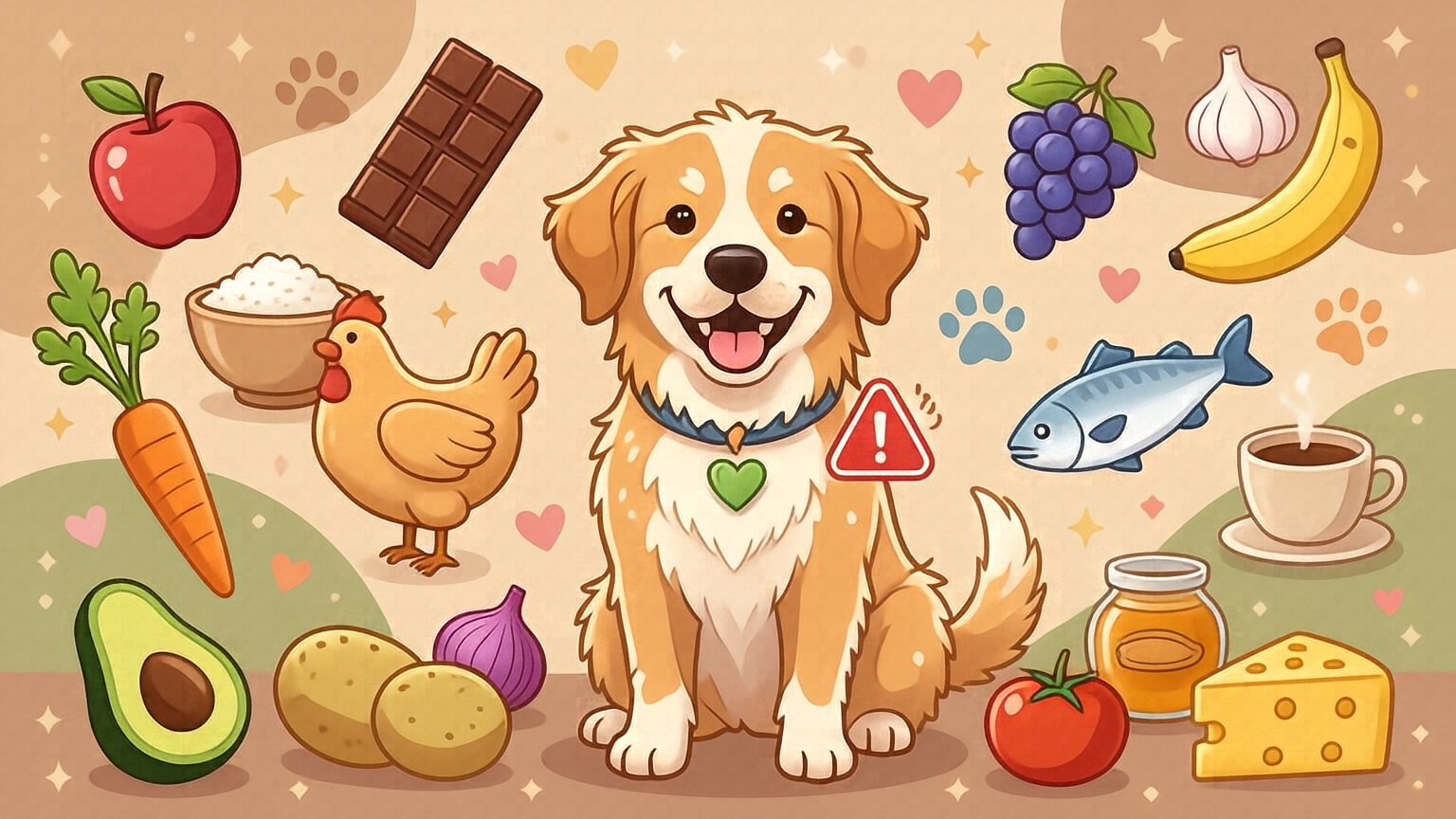
The kitchen is the number one source of poisoning in dogs. Nobody needs to buy rat poison: a handful of grapes, a sugar-free gum, or the leftovers of an onion-heavy stew can land a dog in the emergency room. This guide ranks toxic human foods for dogs by risk level, so you know what to keep out of the house entirely, what to limit, and what to watch for.
Extreme risk: never in the house, not even small amounts
These foods can cause serious injury or death in tiny quantities. The rule is simple: if you can’t store it beyond your dog’s reach, don’t buy it.
- Xylitol (birch sugar). The sweetener in gum, mints, toothpaste, and some "no sugar added" peanut butters. It triggers a massive insulin release: hypoglycemia within 15–30 minutes and liver failure in serious cases. Gram for gram, it’s probably the most dangerous food toxin for dogs.
- Grapes and raisins. The toxic dose is unpredictable — some dogs develop acute kidney failure after a small handful. There is no antidote. Call your vet the same day even if it was "just a few."
- Onions, garlic, leeks, and chives. They destroy red blood cells and cause hemolytic anemia. Garlic is more potent per gram than onion, and the damage shows up days later — long after "wait and see" has stopped being an option.
- Macadamia nuts. Vomiting, tremors, overheating, and hind-leg weakness, with toxicity reported from roughly 2 g/kg.
- Cooked bones. Not a chemical toxin, but they splinter into sharp fragments that perforate the esophagus and intestines. One of the leading causes of abdominal surgery in dogs.
High risk: dose-dependent toxins
- Chocolate and cocoa. Theobromine clears extremely slowly in dogs. The darker, the deadlier — see our step-by-step emergency guide if your dog stole a bar.
- Alcohol and raw bread dough. Ethanol depresses the nervous system; yeast dough ferments inside the stomach, producing alcohol on the spot and potentially bloating the stomach to a surgical emergency.
- Caffeine and energy products. Coffee, strong tea, sodas, and energy drinks hit the heart and brain. Nicotine patches and swallowed cigarette butts belong here too.
- Avocado. Persin causes vomiting and diarrhea in sensitive dogs, and the large pit is a genuine obstruction hazard.
- Salt overload. Salted bones, brines, and bacon grease cause sodium ion poisoning: vomiting, tremors, seizures.
Moderate risk: fine in small doses, problematic in quantity
- Liver and organ meats in excess. Packed with vitamin A; frequent large servings cause hypervitaminosis A (bone pain, joint problems).
- Tuna and large oily fish. Not acutely toxic, but mercury and phosphorus content make them an occasional treat, not a dietary staple.
- Dairy. Many dogs lose the ability to digest lactose after puppyhood: expect gas and diarrhea. Plain yogurt is usually the digestible exception.
- Fruit pits (cherries, apricots, apple seeds). They contain amygdalin, which releases cyanide. A few seeds won’t kill; a bowl of crushed pits can.
- Green tomatoes and green potato parts. Solanine at levels that cause digestive and neurological symptoms. Cooked potato and ripe red tomato are fine.
Red-flag symptoms that mean an urgent visit
Repeated vomiting, bloody diarrhea, tremors, seizures, difficulty breathing, pale or blue gums, extreme lethargy, or collapse. If any of these follow access to a suspect food, don’t wait to see if it passes: call the emergency vet and bring the packaging or a photo of what was eaten.
How to use this list at home
- Audit your pantry: search labels for "xylitol" or "sweeteners" in gum, sauces, and nut butters.
- Break the table-scraps habit: onion-and-garlic-based stews and sauces are the silent villains.
- Define a dog-safe zone with no food within nose range when nobody’s watching.
- Keep emergency numbers saved: your nearest 24-hour vet and, in the US, ASPCA Animal Poison Control (888-426-4435) or Pet Poison Helpline (855-764-7661).
Bottom line
Food toxicity isn’t black and white — it depends on the food, the dose, and the dog. For extreme-risk items, the only safe amount is zero. For moderate-risk ones, common sense and moderation. Bookmark this list and share it with everyone who feeds your dog: most poisonings happen when a well-meaning visitor "just gives them a little bite" from the table.
Educational content based on veterinary sources (ASPCA, PetMD, Pet Poison Helpline). Does not replace professional diagnosis.
Leave a Reply